
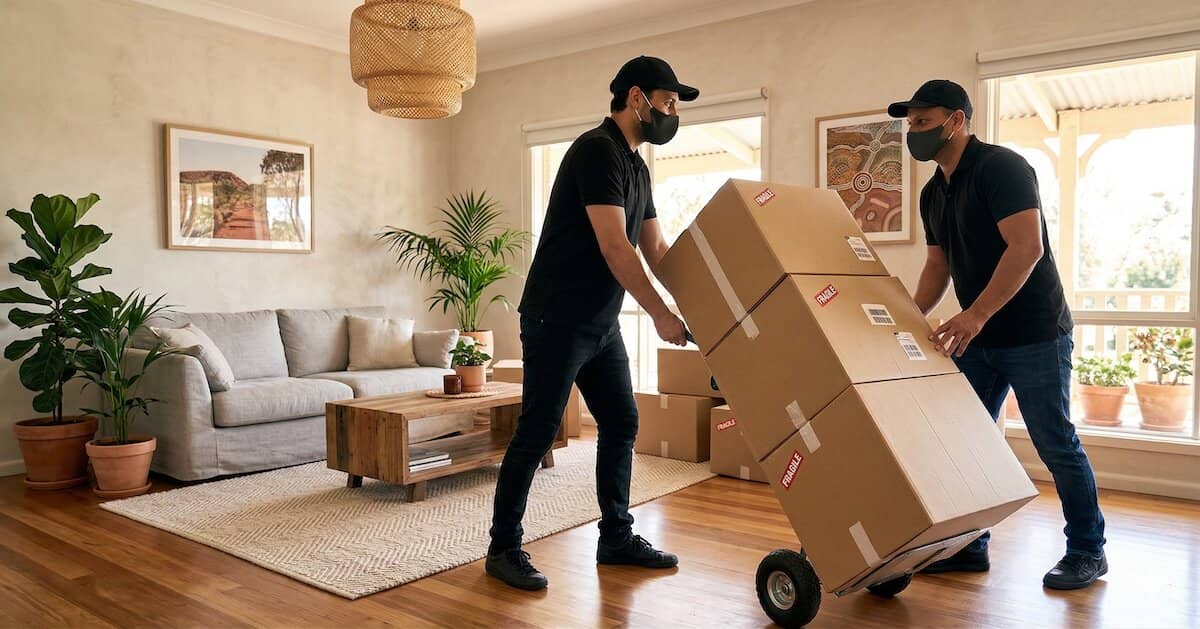
If you run a removalist business, you already know the work is physical, the hours are long, and the margins can be tight. But here’s the thing that surprises most removalist owners: doing great work isn’t enough.
People who need a removalist don’t ask around like they used to. They search Google, read reviews, compare a handful of quotes, and book – often within hours. If you’re not visible at that moment, someone else gets the job.
That’s what this guide is about. We’ll walk through every practical marketing channel available to a removalist business in Australia – from getting your Google Business Profile right through to the one offline channel that almost no removalist is using properly: direct mail targeting people who are actively in the process of moving.
This guide is written for removalist business owners – not marketing experts. Every section is in plain language with specific, actionable steps you can start this week.
1. Know your customer – who actually books a removalist?
Before you spend a dollar on marketing, it pays to get clear on who you’re trying to reach. The “marketing for everyone” approach is one of the biggest wastes of money in this industry.
Most removalist bookings come from one of three types of customers:
- Residential movers – families and individuals moving house within the same city or suburb. This is your bread-and-butter customer. They’re often stressed, making quick decisions, and highly influenced by reviews and price.
- Interstate movers – customers relocating between states. They tend to book earlier, do more research, and are often willing to pay more for a company they can trust.
- Commercial clients – businesses relocating offices. Fewer jobs but higher value. They often come through relationships, referrals, or partnerships with commercial real estate agents.
Understanding who you’re targeting helps you choose the right channels and write the right messages. A Facebook ad that works for residential movers won’t necessarily win a commercial contract. The same is true across stages of the buying journey. The message a customer needs on Facebook when they’ve just sold their house is very different from what they need on Google two weeks later when they’re shortlisting removalists. We’ve broken down the full framework in our guide on understanding your customer’s buying journey and how it should change your marketing.
According to the Australian Bureau of Statistics, over 565,000 residential dwelling transfers were recorded in Australia in 2025 alone. Every one of those transactions represents a household that needs a removalist. The question is simply whether they find you or one of your competitors.
Key insight: the number one driver of all removalist bookings is trust. Customers are handing over every item they own to a stranger. Your marketing job, above all else, is to make people feel safe choosing you.
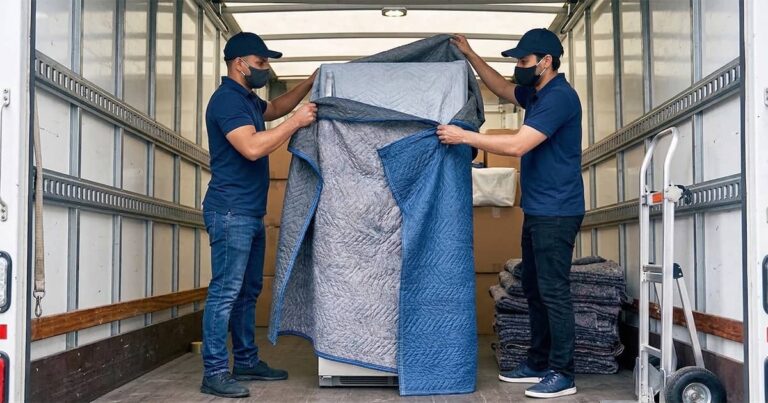
2. Get your foundations right – website, Google Business Profile, and reviews
Before you run a single ad or post a single social media update, your foundations need to be solid. This is the stuff that turns a curious visitor into an actual booking.
Your website checklist
Your website doesn’t need to win a design award. It needs to do one thing well: make it easy for someone to get a quote or call you. Here’s what that means in practice:
- Load fast on a mobile phone – most people will find you on their phone
- Have a clear phone number visible at the top of every page
- Include an easy online quote request form
- Show real photos of your trucks, your team, and your gear
- Display your service areas clearly
- Show your reviews – don’t hide them
- Make your pricing or pricing structure transparent – even a rough guide builds trust
The full deep-dive on how to do that — including the ten elements every high-converting removalist site needs and the changes that consistently double quote requests — is in our guide on building a removalist website that actually converts.
According to BrightLocal’s research, 62% of consumers would avoid using a business if they found incorrect or incomplete information online. Your website is often the first place people check – if it looks unprofessional, outdated, or difficult to navigate, you’re losing bookings before you’ve even spoken to the customer.
One thing many removalist websites get wrong: they talk about themselves rather than the customer. Instead of “We are a family-owned removalist with 10 years of experience”, try “We make your move stress-free – local and interstate removals across Melbourne.” Lead with what the customer gets.
Google Business Profile – set it up properly
Your Google Business Profile (formerly Google My Business) is one of the most powerful free tools available to a local removalist. When someone searches “removalists near me” or “removalists [your suburb]”, your profile can appear in the map results before any website links.
This matters more than most people realise. Semrush data shows that businesses in the Google local map pack get 126% more website traffic and 93% more calls, directions requests, and clicks than businesses ranked in positions 4-10. Getting into those top three spots is one of the highest-leverage things you can do in local marketing.
Key things to do:
- Claim and verify your profile at business.google.com
- Fill in every field – hours, services, service areas, description
- Upload high-quality photos of your trucks and team (at least 10)
- Post updates regularly – move tips, promotions, team spotlights
- Respond to every review, positive or negative, within 24 hours
Google rewards profiles that are active and complete with better visibility. An unclaimed or half-filled profile is leaving free traffic on the table.
Your Google Business Profile is also the foundation of local search rankings. We’ve broken down how to use it as a ranking weapon in our guide on how to rank in Google for the suburbs you actually serve.
Reviews – how to get them and use them
Reviews are everything in this industry. Research compiled by Backlinko shows that 93% of consumers read reviews before making a purchase, and 55% of consumers won’t consider a business with an average rating below 4 stars. In a high-trust industry like removals, that bar is non-negotiable.
The simplest way to get more reviews: ask. After every successful move, send a follow-up SMS or email thanking the customer and including a direct link to your Google review page. According to Trustmary, up to 72% of customers will write a review if they are directly asked to do so – most people are happy to help, they just need the prompt.
Don’t panic about the occasional bad review. BrightLocal found that 88% of consumers say they’d use a business that responds to both positive and negative reviews, whilst only 47% would consider using a business that doesn’t respond to its reviews at all. How you handle a complaint can actually build more trust than a spotless record. The full system for capturing reviews on autopilot, responding to them properly, and putting them to work across every other channel is in our deep-dive guide on how to get more Google reviews for your removalist business.
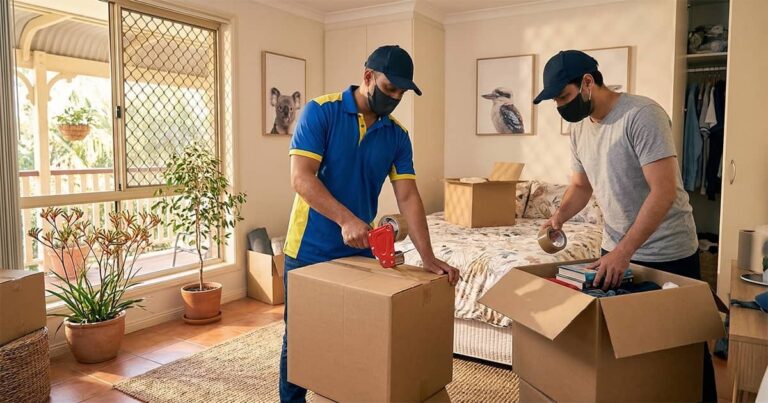
3. Local SEO – show up when people search for a removalist
Search Engine Optimisation (SEO) is about making sure your website appears high in Google’s results when someone searches for a removalist in your area. Unlike paid ads, SEO doesn’t cost you per click – once you rank well, the traffic is essentially free.
The most important thing to understand about SEO for removalists is that it’s almost entirely local. People search for “removalists Sydney”, “removalists Parramatta”, “cheap movers Melbourne CBD”. Your goal is to rank for the suburbs and cities you actually work in.
For the deep-dive on exactly how to do that — Google Business Profile setup, suburb pages, NAP consistency, schema markup, and a 90-day plan — see our complete local SEO guide for removalists.
The scale of local search is significant. According to Google, 46% of all Google searches have local intent – meaning nearly half of every search made on Google is from someone looking for a business or service nearby. For a removalist, that’s a massive opportunity that most businesses aren’t fully capitalising on.
The basics of local SEO
- Make sure your business name, address, and phone number are identical everywhere online – your website, Google Business Profile, Yellow Pages, True Local, and any directory listings. BrightLocal reports that 62% of people would avoid a business after finding inaccurate information about it online.
- Create pages on your website for each major suburb or city you serve (e.g. “Removalists North Sydney”, “Removalists Manly”)
- Write useful content – moving guides, packing tips, suburb guides – that answers the questions your customers are Googling
- Get links from local websites – local business directories, community groups, real estate partners
- Build a steady, consistent flow of new Google reviews. Reviews are one of the strongest local ranking signals Google uses. We’ve broken down the system in our removalist Google reviews guide.
SEO is a long game. You won’t jump to page one overnight. But according to Semrush, the top three spots in local search results average 561 Google reviews and a 4.8 average rating – which tells you that building your profile consistently over time is exactly what gets you there. Businesses that invest even a few hours a month build a significant advantage over competitors who rely solely on paid ads. For a side-by-side look at how SEO stacks up against the other digital channels — and where to actually start — see our guide to the best digital marketing strategies for removalist businesses.
4. Paid advertising – fast results with Google Ads and Meta
If you want phone calls and quote requests this week rather than in six months, paid advertising is the answer. The two most effective platforms for removalists are Google Ads and Meta (Facebook and Instagram).
They work in fundamentally different ways because they reach customers at different stages of the buying journey. Our customer buying journey guide for removalists explains why the same ad copy fails on both platforms and what to write instead.
Google Ads
Google Ads puts your business at the top of search results when someone types in “removalists near me” or “local removalist [your city]”. You only pay when someone clicks your ad – hence the term pay-per-click (PPC).
What makes Google Ads particularly powerful for removalists is intent. The person searching for a removalist right now is actively ready to book. According to WordStream, when correctly set up and managed, businesses make an average of $2 in revenue for every $1 spent on Google Ads. A separate study cited by HubSpot puts that figure even higher, noting PPC ads typically deliver a 200% average ROI when well optimised.
Tips for removalist Google Ads:
- Focus on specific, local keywords – “removalists Melbourne CBD” converts better than just “removalists”
- Send clicks to a dedicated landing page, not your homepage — we’ve covered what that landing page should look like in our guide on building a removalist website that converts.
- Include your phone number in the ad so people can call directly from the search results
- Set a daily budget you’re comfortable with and track your cost per lead
One important caveat: Google Ads rewards good management. WordStream’s 2025 benchmark report, based on analysis of over 16,000 campaigns, shows cost per lead has been rising steadily year on year – making it more important than ever to track what’s actually converting, not just what’s clicking. If you’re weighing up Google Ads against SEO, reviews, and Meta, our breakdown of the highest-ROI digital marketing strategies for removalists shows where each one fits. If you want the deeper walkthrough – keyword research, landing page structure, negative keyword lists, and realistic cost-per-lead numbers for removalists – read our practical guide to Google Ads for removalists.
Meta Ads (Facebook and Instagram)
Meta Ads work differently to Google. Instead of reaching people who are actively searching, you’re reaching people based on their profile – where they live, their age, their life events (like a recent home purchase). This makes Meta particularly useful for building brand awareness and targeting people who might be planning a move soon.
The most effective Meta strategy for removalists is retargeting – showing ads to people who have already visited your website. These people already know who you are, so the conversion rate is much higher than cold audiences. HubSpot’s marketing statistics show that PPC ads boost brand awareness by an average of 80%, making retargeting particularly powerful for service businesses where customers need multiple touchpoints before booking.
The full deep-dive on Meta — which campaign objectives actually work for removalists, how to target movers specifically, what creative converts on Facebook and Instagram, and realistic cost-per-booking numbers — is in our practical guide to Meta Ads for removalists.
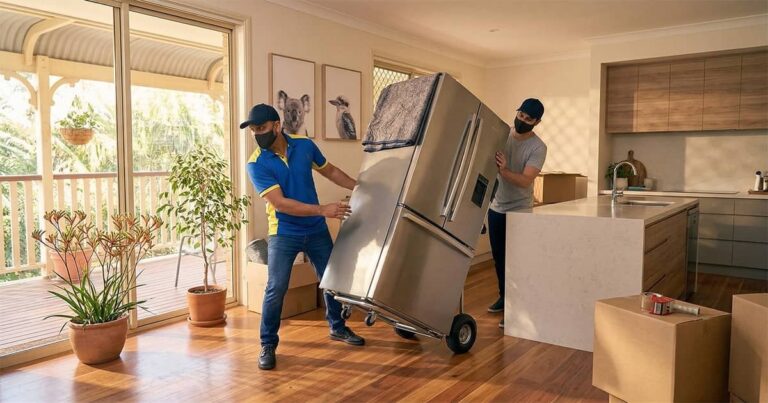
5. Social media — what actually moves the needle
Let’s be honest: social media isn’t where most removalists win new business directly. But it plays an important supporting role — it builds familiarity, trust, and keeps you front of mind.
The platform that works best for most removalist businesses is Facebook, particularly local community groups. Being active in suburb and neighbourhood groups — answering moving questions, sharing tips, occasionally mentioning your services — builds genuine local awareness in a way that feels authentic rather than salesy.
The data supports a social-first approach to trust-building. Research from DemandSage shows that 71% of consumers are easily influenced by social media referrals, and according to Invespcro, 81% of consumers’ purchase decisions are influenced by posts from people they follow — underlining why being active and visible in your local community online genuinely matters.
Content ideas that work:
- Moving tip of the week (builds credibility)
- Behind-the-scenes footage of a challenging move
- Team member introductions
- Customer success stories (with permission)
- Seasonal reminders (“book your Christmas move now — slots are filling fast”)
The key is consistency over frequency. Posting twice a week reliably is far better than a burst of daily posts followed by silence for a month.
6. Referrals and partnerships – the power of word-of-mouth
Word-of-mouth has always been the lifeblood of the removalist industry, and it still is. A personal recommendation from a trusted friend is worth more than any ad you could run.
The research backs this up strongly. According to DemandSage, 92% of consumers trust referrals from friends and family above all other forms of marketing. And it’s not just a trust signal – research published by Firework shows that referred customers have a 37% higher retention rate and are four times more likely to refer others in turn, creating a compounding effect over time.
McKinsey & Co. research estimates that word-of-mouth influences between 20% and 50% of all purchasing decisions – making it the single most influential marketing force across most consumer categories, including services like removals.
A formal referral program
Make it easy and rewarding for past customers to refer you. A simple offer – “refer a friend and you both get $50 off” – dramatically increases the number of referrals you receive. According to research on referral behaviour, 83% of satisfied customers are willing to give a referral, but only 29% actually do – largely because they were never asked. Include referral cards in your post-move follow-up, and mention it in your thank-you SMS or email.
Business partnerships
The highest-value referral sources for most removalists are real estate agents and property managers. They deal with movers every single day. A good relationship with even a handful of local agents can provide a steady stream of referrals at no ongoing cost.
How to build these relationships:
- Introduce yourself in person to local real estate offices
- Offer a simple referral arrangement – a small gift card or commission for every completed job
- Be reliable and professional so agents feel confident recommending you
- Stay in touch with a regular (but not annoying) check-in – a holiday card, a useful moving guide they can share with clients
7. Direct mail – reach people before they even search
This is the channel most removalists completely overlook. And that’s exactly why it works so well for the ones who use it. For a dedicated deep-dive on this channel, including response rates, timing, and what to put on the mailer, see our full guide on how to use direct mail to reach movers before they search Google.
Every other marketing channel in this guide – Google Ads, SEO, social media – reaches people after they’re already searching or browsing. Direct mail does something different: it lets you put your business card in the hands of people who are actively in the process of moving, before they’ve even started comparing removalists.
Why movers are the perfect direct mail audience
Think about the timing. When someone lists their property for sale, exchanges contracts, or registers an address change, they’re about to need a removalist. That’s a very specific window of time – usually two to eight weeks – where they’re making all their moving decisions.
If your marketing reaches them in that window, you have a significant advantage. You’re potentially the first removalist they’ve heard from, before they’ve typed a single search term into Google.
Traditional letterbox drops miss this opportunity because they go to everyone – including thousands of people who aren’t moving. The response rate for generic, untargeted mail is predictably low. But the story changes dramatically when mail is targeted. According to the Data & Marketing Association (DMA), direct mail to a house list – people with an existing relationship with a business – achieves an average 9% response rate, compared to less than 1% for email. Even cold prospect lists average around 5% – still five times higher than most digital channels.
Research aggregated by Postalytics shows that 84% of marketers agree direct mail delivers the best ROI of any channel they use, and 85% say it delivers the best conversion rate. The reason? Physical mail has an 80-90% open rate, compared to 20-30% for email. When someone pulls a card out of their letterbox, they almost always look at it.
When that card is relevant – and a moving family receiving a removalist mailer is about as relevant as marketing gets – the response rates climb further still.
How to use data to find people who are about to move
This is where data changes everything. Property transaction data – specifically new property listings, contract exchanges, and change-of-address records – can tell you with remarkable accuracy who is about to move in your service area.
With access to this kind of data, you can send a personalised, well-timed mailer to exactly the right households, rather than blanketing an entire suburb. The result is a much higher response rate, much less wasted spend, and customers who arrive already feeling like you understood their needs – because your card arrived when they needed it.
To put the opportunity in context: the ABS recorded over 565,000 residential property transfers across Australia in 2025. That’s more than 565,000 households who needed a removalist at some point during the year – a ready-made, highly motivated audience sitting in property transaction data. We unpack exactly how to tap into that data – and how it compares to Google Ads on cost per booking – in our complete guide to direct mail for removalists.
How Move First automates this for removalists
Move First is a data scraping and direct mail platform built specifically for businesses that want to reach people at the moment of a move. It continuously monitors property listing data and change-of-address signals to identify people in your service area who are in the process of moving.
When Move First identifies a match, it automatically triggers a personalised mailer to that household – with your branding, your offer, and your contact details – delivered at exactly the right moment.
For a removalist business, this means:
- Your mailer lands in the letterbox of someone actively organising a move
- You get first-mover advantage before they’ve compared quotes
- No wasted spend on households that aren’t moving
- Completely automated – set it up once and it runs in the background
- Trackable – you can see how many mailers were sent and match them back to enquiries
Move First integrates data sourcing, design, print, and letterbox delivery into a single platform. You don’t need to manage a mailing list, source addresses, or deal with print suppliers. It all happens automatically.
What to include in your mailer
The best removalist direct mail pieces are simple and direct. You have about three seconds of attention before someone decides whether to read on or recycle it.
The essentials:
- A clear headline that speaks directly to the reader’s situation – “Planning your move? Here’s $50 off your next removal.”
- Your business name, logo, and phone number prominently displayed
- Two or three trust signals – years in business, number of moves completed, your Google rating
- A clear call to action – “Call today for a free quote” or “Scan this QR code to book online”
- A time-limited offer to create urgency
According to the DMA Response Rate Report, postcards achieve a 4.25% response rate – higher than letter-sized mail – because they’re cheaper to produce and don’t require the recipient to open anything. A well-designed postcard with a strong headline will outperform a full letter in most cases.
8. Seasonal marketing – peak periods and quiet months
The removalist industry is highly seasonal, and your marketing budget should reflect that. Understanding when demand peaks – and when it drops – helps you get more from every dollar.
In Australia, demand for removalists typically peaks:
- Late November through January – the school holiday and summer rush
- March to May – autumn moves, end-of-lease cycles
- End of each month – many leases expire on the last day of the month
During peak periods, focus your spend on immediate-response channels: Google Ads, direct mail, and your Google Business Profile. During quieter months, it pays to invest in longer-term channels: SEO, content creation, and relationship-building with real estate agents.
Don’t go completely dark in quiet months. Removalists who disappear from marketing during slow periods find themselves in a hole when demand picks back up – their competitors have stayed visible and captured the early enquiries.
9. Measuring what works – the key numbers to track
You don’t need to be a data analyst to measure your marketing. But you do need to track a few key numbers consistently, otherwise you have no idea which channels are delivering results and which are wasting money.
| Metric | What it tells you |
|---|---|
| Cost per lead | How much each enquiry is costing you across each channel |
| Quote-to-booking rate | What percentage of quotes convert to paid jobs – a low rate might indicate a pricing or follow-up issue, not a marketing problem |
| Customer acquisition cost | Total marketing spend divided by number of new customers – your single most important efficiency metric |
| Source of enquiries | Where your bookings are coming from – Google, referral, direct mail, social – so you can double down on what works |
| Average job value | Knowing this helps you work out how much you can afford to spend to acquire each customer |
At a minimum, ask every new enquiry how they heard about you. Even a simple pen-and-paper tally tells you more than you’d think. WordStream’s research highlights that cost per lead and conversion rate are the two metrics that matter most for service businesses running paid campaigns – everything else is secondary until you’ve got those two dialled in.
For the full breakdown of what each channel actually costs, realistic cost per lead and cost per booking benchmarks, and three worked budget examples for different sizes of business, see our guide on how much a removalist should spend on marketing.
Frequently asked questions
How do I get customers for my moving business?
Start with your Google Business Profile and make sure your reviews are strong. Our guide on getting more Google reviews for your removalist business walks through the system that produces them on autopilot. From there, Google Ads will get you bookings quickly – our step-by-step Google Ads guide for removalists walks through the setup.. For sustainable growth, invest in local SEO and build relationships with real estate agents. For first-mover advantage, add direct mail targeting people who are actively in the process of moving – tools like Move First automate this for you.
How much should a removalist spend on marketing?
A common benchmark for small service businesses is 5-10% of revenue. If you’re in growth mode, spending at the higher end makes sense. If you’re established with strong word-of-mouth, you might manage at the lower end. The more important question is not how much you spend, but how well you track your return on each channel.
We’ve broken down real budget ranges by business size, cost per lead and cost per booking by channel, and where owners most commonly waste money in our dedicated guide on removalist marketing costs and budgets.
What is the best marketing channel for removalists?
There isn’t a single answer – it depends on your goals. For fast enquiries: Google Ads – see our full breakdown of how to set up Google Ads for a removalist business. For long-term free traffic: local SEO — see our step-by-step local SEO playbook for removalists for how to start. For brand awareness: social media. For first-mover advantage: direct mail to people actively moving. The most effective strategies combine at least two or three of these channels working together.
Do removalists need a website?
Yes, absolutely. Even if someone finds you through word of mouth, the first thing they’ll do is Google your name. A professional, easy-to-navigate website with clear contact details and real reviews will convert that interest into an enquiry. The specific elements that separate a converting site from a leaky one are covered in our removalist website conversion guide. According to BrightLocal, 62% of consumers would avoid a business they cannot find properly online.
Does direct mail still work in 2025?
Yes – especially when it’s targeted. The Data & Marketing Association consistently reports direct mail response rates of 5-9% – five to nine times higher than email and most digital channels. Because few removalists are doing targeted direct mail well, the competition in the letterbox is far lower than in Google search results. We’ve put together a detailed breakdown of direct mail for removalists if you want to see exactly how it works in practice.
Start with one channel, then build
The worst thing you can do with this guide is try to implement everything at once. You’ll spread yourself thin, do each thing poorly, and struggle to measure what’s working.
Instead, start with the foundations – your Google Business Profile and your reviews – then add one channel at a time and measure the results before adding the next. If you want a longer-term play that compounds for years rather than weeks, our local SEO guide for removalists walks through the slow-but-free side of that equation. For a step-by-step prioritisation order across all the digital channels, see our digital marketing roadmap for removalist businesses.
If you’re looking for the single highest-leverage move that most of your competitors aren’t making, start with direct mail targeting people who are actively moving. It reaches the right people at the right moment – before they’ve even begun comparing quotes.
Move First makes this effortless. It identifies people moving in your service area, sends them a personalised mailer with your details, and does it all automatically. Visit movefirst.com.au to see how it works.