

Most removalist marketing fails for the same reason. The business runs one message across every channel: “family-owned, fully insured, competitive pricing, get a free quote today.” The Facebook ad says it. The Google Ad says it. The homepage says it. The mailer says it.
The problem is that the person seeing each of those things is at a completely different stage of their moving journey, and they need to hear a completely different thing.
The person scrolling Facebook probably isn’t looking for a removalist yet. They just listed their house and their brain is thinking about school zones and mortgage brokers. The person typing “removalists Parramatta” into Google has already decided they need one and is now trying to work out which one to trust. The person on your website quote form has narrowed it down to three or four options and is looking for the one reason to pick you over the others.
Same customer, different moment. Different job for your marketing to do.
This guide walks through the four stages of the removalist buying journey, what your customer actually needs at each one, and which of your marketing channels is built to reach them there. Get this right and the same marketing budget starts producing dramatically more bookings, because every touchpoint finally does the job it’s meant to do.
This article is part of our broader complete guide to marketing your removalist business. Read that first for the full picture, or stay here for the journey deep-dive.
Why the “one message everywhere” approach costs you bookings
The removalist industry is unusual in one important way. Almost every customer has a hard, dated deadline (the day they need to be out of one home and into the next), which forces a very compressed buying journey. Most movers go from “I might need a removalist” to “I’ve booked a removalist” in three to eight weeks.
Inside that window, the customer’s mindset shifts multiple times. Google’s research on the modern buying journey calls this the “messy middle”: a stretched-out period where the customer moves back and forth between exploring options and narrowing them down, before finally making a decision. What they want to hear from you shifts as they move through that middle.
If your marketing says the same thing at every stage, three things happen:
- Awareness-stage customers see ads that feel like a sales pitch when they weren’t asking to be sold to, and they scroll past.
- Research-stage customers get generic messaging when they wanted specifics, and they move on to a competitor whose content actually answers their question.
- Decision-stage customers get reassurance they’ve already earned, but nothing that closes the deal.
The businesses that win are the ones whose message matches the moment. That’s what a stage-mapped marketing plan does.
The four stages of a removalist customer’s journey
For a typical residential mover, the journey looks like this.
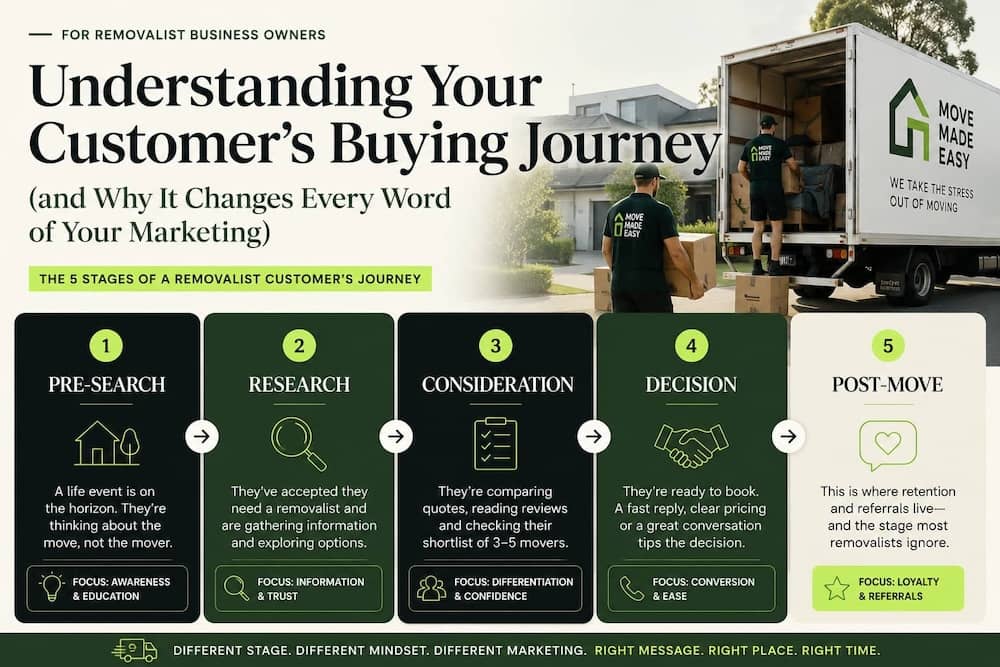
Stage 1: Pre-search. The customer has a life event coming up (sold a house, exchanged contracts, been offered a job interstate, had a baby, ending a lease) but hasn’t started looking for a removalist yet. Their brain is on the move in general, not the mover specifically.
Stage 2: Research. They’ve now accepted they need a removalist. They’re Googling terms like “how to choose a removalist”, “removalist prices Melbourne”, or “removalists near me”. They’re gathering information but haven’t shortlisted anyone yet.
Stage 3: Consideration. They’ve narrowed the field to three to five removalists. They’re comparing quotes, reading reviews, checking websites, maybe calling for a chat. This is where the decision is really made.
Stage 4: Decision. They’re on your quote form or your phone, ready to book, and the last small thing (a fast reply, a warm phone manner, a clear pricing structure) tips them in your direction.
There’s a fifth stage worth naming, which is Post-move. This is where retention and referrals live, and it’s the stage most removalists ignore entirely.
Each of these stages needs different marketing, in different places, with different messages. Here’s what each one looks like in practice.
Stage 1: Pre-search. Create the problem, not the solution.
At this point the customer isn’t looking for you. They don’t want to hear about your family history or your fleet size. They aren’t comparing quotes because they haven’t started asking for any yet. If you shout “book us today” at them, they scroll.
What they are thinking about is the move itself. Everything they need to do. The mental load of packing, the timing of utilities, the school enrolment paperwork, whether it’s really worth trying to do it themselves with a ute and a couple of mates.
Your marketing job at this stage is to create problem awareness. Show them the drawbacks of the DIY move they were considering. Show them the ten things they haven’t thought of yet. Show them the timeline they should be working to. When you do this well, you’re not selling. You’re being useful, and the byproduct is that they start thinking of you when they eventually do need a removalist.
Channels that work in Stage 1:
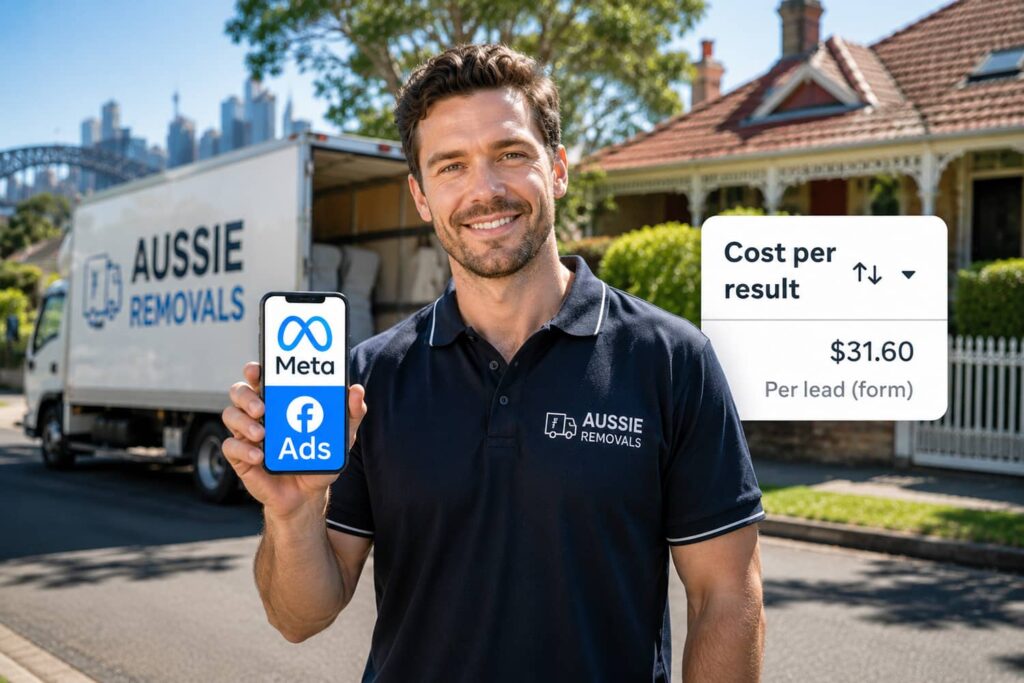
- Meta ads (Facebook and Instagram). People at this stage are scrolling, not searching. Meta’s targeting can reach them based on recent life events (recently moved home, engaged, had a baby) or interests. Video and carousel ads that frame the problem, not the solution, are the winners here. Deep-dive on how to run these properly is in our Meta ads for removalists guide.
- Data-driven direct mail. The most under-used pre-search channel. When someone lists a property, they’ve just entered Stage 1. Move First uses that listing data to send a personalised letter to their letterbox within days, before they’ve typed a single search into Google. It’s covered in detail in our direct mail for removalists guide.
- Social content in community groups. Local Facebook groups, “Bought a house in [suburb]” threads, moving tips carousels on Instagram. Not selling, just being present and useful.
Message shape for Stage 1:
Not this: “Family-owned Sydney removalist since 1998. Get a free quote today.”
More like this: “Moving day is 4 weeks away. Here are 12 things most people forget until it’s too late.”
Or: “Thinking of doing it yourself? Read this first.”
Or: “You just sold your house. Here’s what to sort out in the next 30 days.”
The best Stage 1 marketing barely feels like marketing. That’s the point.
Stage 2: Research. Educate, and become the trusted voice.
Now the customer knows they need a removalist. They’ve started Googling. What they haven’t done yet is decide which one.
Their searches at this stage are broad: “how much does a removalist cost”, “how to choose a removalist”, “removalist near me”, “packing tips before movers arrive”. They’re not ready to book. They’re trying to build enough understanding to know what a good removalist looks like and what to watch out for.
Your job in Stage 2 is to educate them, and in doing so, position yourself as a trusted expert. When they eventually shortlist, you want them to think of you first because you were the one who actually answered their question.
Channels that work in Stage 2:
- Local SEO and content. The article that ranks for “how much does a removalist cost in Brisbane” is the article that gets them thinking about you. Our local SEO guide for removalists breaks down how to build this properly.
- Google Business Profile. Even at the research stage, they’re already looking at profiles in the 3-pack. A well-built profile with strong reviews signals “worth knowing about” even before they’re shortlisting. See our complete Google Business Profile guide for removalists.
- YouTube and long-form content. Video walkthroughs, packing tutorials, day-of-move explainers. Very few removalist businesses do this. The ones who do become the trusted voice in their area.
- Meta retargeting. People who saw your Stage 1 ads and are now researching may see your retargeted content that goes one step deeper. This is where a customer who half-remembered you starts to remember you properly.
Message shape for Stage 2:
Not this: “Book us for your Brisbane move.”
More like this: “Removalist prices in Brisbane: what a typical local move actually costs in 2026.”
Or: “5 questions to ask a removalist before you book (that most people forget).”
Or: “The difference between a $600 and a $1,200 local move, explained honestly.”
You’re not asking for the sale. You’re proving you know what you’re talking about. When they shortlist, you’re on the list because you earned it.
Stage 3: Consideration. Demonstrate capability and credibility.
The customer has shortlisted three to five removalists. They’re actively comparing. They’re reading reviews on Google, ProductReview and social. They’re visiting websites and checking whether the vibe matches what they need. They may be asking for quotes, or they’re about to.
This is the highest-stakes stage of your marketing, because the decision gets made here. Everything you did in Stages 1 and 2 was to earn a spot on the shortlist. Stage 3 is where you win the actual booking.
The customer’s mindset now is: “Which of these can I trust with my stuff, on the day I need them, at a price I can accept?” They’re not asking whether they need a removalist. They’re asking which one.
Your job in Stage 3 is to demonstrate capability and credibility. Not through claims, but through proof: reviews, photos, transparent pricing, professional processes, easy communication.
Channels that work in Stage 3:
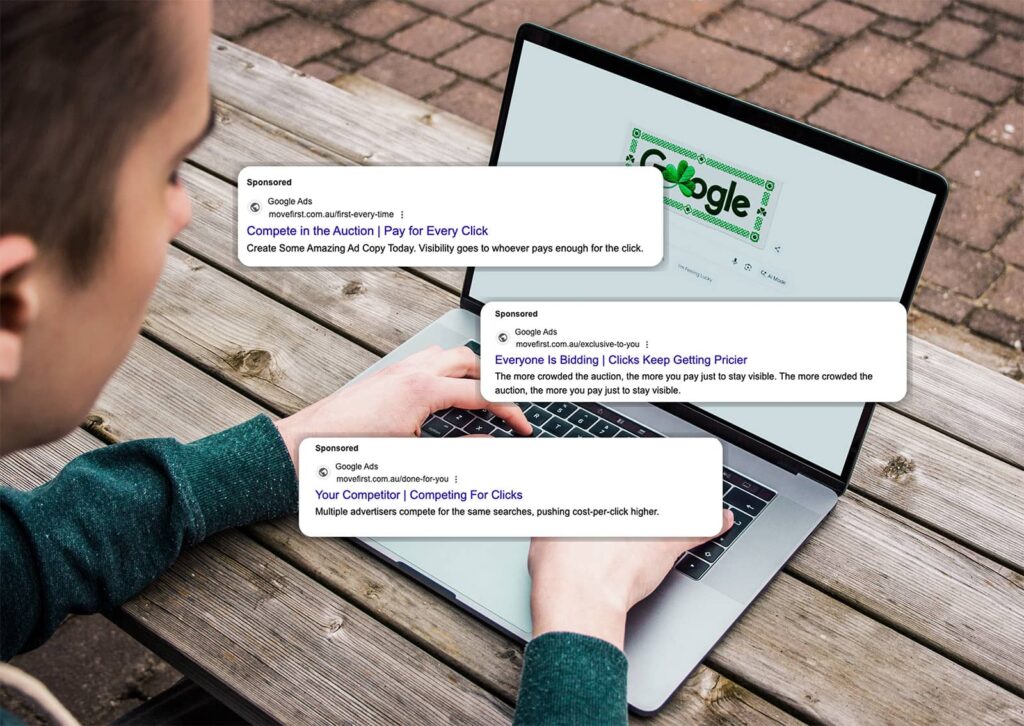
- Google Ads. The customer at this stage is searching high-intent terms like “removalists Newcastle” or “interstate removalists Sydney to Brisbane”. Google Ads puts you at the top of that result. Our practical guide to Google Ads for removalists covers how to run these profitably.
- Your website. The single biggest lever in Stage 3. A website that loads fast on a phone, shows real photos of your team and trucks, displays live Google reviews, and makes it easy to request a quote will win a disproportionate share of shortlisted comparisons. Our removalist website conversion guide covers exactly what a Stage 3 website looks like.
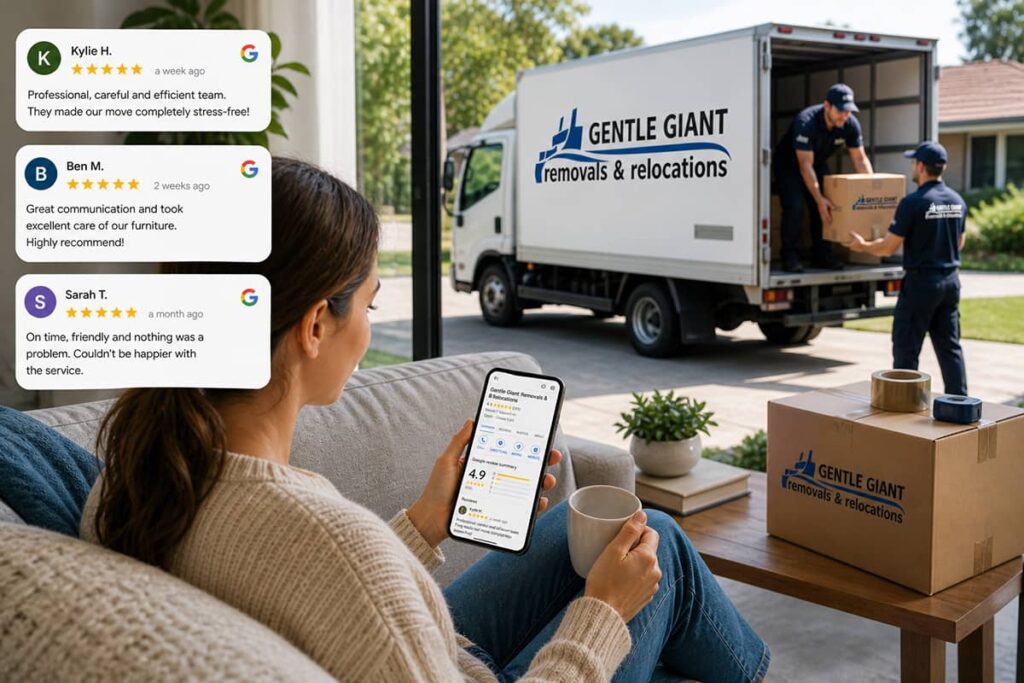
- Google reviews. The single biggest trust signal at this stage. The customer is reading them right now. Our guide on getting more Google reviews for your removalist business covers how to build the profile that wins comparisons.
- Google Business Profile. Shortlisted customers open your profile. Photos, hours, Q&A, and recent posts all get looked at.
Message shape for Stage 3:
Not this: “Get moving today with a great local team.”
More like this: “Fully insured. 1,200+ five-star Google reviews. Real photos of every job. From $140/hour with no hidden fees.”
Or: “Watch how we wrap and load a typical Sydney house move [30-second video].”
Or: “Get your fixed-price quote in 30 minutes, no obligation.”
At Stage 3, specifics beat adjectives. “Fast” doesn’t beat “quote in 30 minutes.” “Trusted” doesn’t beat “1,200+ five-star Google reviews.” Show the proof.
Stage 4: Decision. Remove the last bit of friction.
The customer is on your quote form or your phone, ready to book. Nothing marketing-heavy needs to happen here. Everything is now about removing the last barriers.
At this stage, the ways you lose the booking are painfully simple:
- Your quote form takes 90 seconds and asks for too many fields.
- Your phone rings out.
- Your callback takes 4 hours instead of 30 minutes.
- Your quote email is a wall of PDF fine print.
- Your pricing structure is vague and they can’t tell what they’re actually agreeing to.
Channels and touchpoints that work in Stage 4:
- A fast, obvious quote form on every page of the site.
- A phone number that always gets answered, or a missed-call SMS that fires within minutes.
- A quote reply within 30 to 60 minutes. The BrightLocal research on customer behaviour consistently shows that response time is one of the top three factors in a booking decision.
- A confirmation email that’s warm, clear, and human. Not a legal document.
- A payment or deposit process that’s easy to complete on a phone.
Message shape for Stage 4:
Warm, clear, human, specific. Confirm the date. Confirm the price. Explain what happens next. Give them your direct number and tell them to call any time.
This isn’t a marketing stage. It’s an operations stage that marketing quietly relies on. If your marketing is doing all four earlier stages perfectly but your quote reply takes 6 hours, you’re still losing the bookings.

Stage 5: Post-move. Retain, and turn one job into many.
The move is done. The trucks have gone. Most removalists never speak to that customer again.
That’s leaving money on the table for two reasons. Australians move on average every 5 to 7 years according to Australian Bureau of Statistics data on residential mobility. And moving customers refer other moving customers constantly. Someone who just used you will hear about at least two other people moving in the next 12 months.
Channels that work in Stage 5:
- SMS thank-you and review request within an hour of finishing the job.
- Email newsletter with useful content once a quarter.
- Referral program with a genuine incentive.
- Yearly check-in message around the anniversary of the move.
Small touches, small budget, disproportionately large payoff. Every review earned here is fuel for Stage 3 marketing to the next customer.
How to map your current marketing to the journey
Here’s a simple audit you can do this week. Take every marketing channel you currently run and answer three questions for each:
- Which stage of the journey is this channel actually reaching?
- Does the message match that stage?
- If not, what should it be saying instead?
You’ll often find that your Facebook ads are running Stage 3 messaging to a Stage 1 audience. Or your homepage is running Stage 2 educational content to Stage 3 shortlisters. Fixing the mismatch usually doesn’t cost anything. It just requires the discipline to rewrite what each channel says.
A rough mapping to work from:
- Stage 1 (Pre-search): Meta ads, data-driven direct mail (Move First), social content.
- Stage 2 (Research): SEO, blog content, Google Business Profile, YouTube, Meta retargeting.
- Stage 3 (Consideration): Google Ads, website, Google reviews, Google Business Profile.
- Stage 4 (Decision): Quote form, phone response, email confirmation, pricing clarity.
- Stage 5 (Post-move): SMS, email newsletter, referral program.
If you’d like a longer version of this framework applied across every digital channel, see our best digital marketing strategies for removalist businesses guide. It walks through each channel in more depth and shows how they fit together.
Common mistakes to avoid
Running Google Ads copy on Meta. Google Ads copy is written for someone who is actively searching. Meta users are not. Copy that says “Get a Sydney removalist quote now” bombs on Meta because the audience isn’t asking for a quote yet.
Running Meta ads copy on Google. The reverse is also true. A softer, awareness-stage message (“Planning your move?”) doesn’t beat “Removalists Sydney: Free Quote Within 30 Minutes” on Google, because the searcher is ready to buy.
Investing everything in one stage. Businesses that only run Google Ads (Stage 3) miss all the customers who haven’t started searching yet. Businesses that only run Meta ads (Stage 1) never close the customers who are ready to book. A healthy plan runs at least one channel in each of Stages 1 to 3.
Treating Stage 4 as marketing. The quote reply, the phone answer, the confirmation email. These are operations, not marketing. If your operations are slow, no amount of Google Ads will fix it.
Ignoring Stage 5. Every past customer is a Stage 1 acquisition channel for their friends. Ignoring post-move communication means walking away from your cheapest source of new bookings.
When you’d rather have someone build all of this for you
Mapping your marketing to the journey and keeping every channel on-message across all five stages is genuinely a lot of moving parts. If you’d rather have a team run the whole thing end-to-end (ad accounts, SEO, website, tracking, all aligned to the journey stages), our sister agency Apollo Digital does this work for service businesses across Australia.
The takeaway
Your customer is a different person at 8pm scrolling Instagram than they are at 11pm typing into Google. They’re a different person again the next morning when they’ve shortlisted three removalists and are staring at your website.
The removalists who win the booking are the ones whose marketing meets that person at each stage with the right message. Not the same “family-owned, fully insured, book today” shouted at every one of them. Something tuned to where they actually are.
The framework is simple. Pre-search creates the problem. Research educates. Consideration proves capability. Decision removes friction. Post-move retains and refers.
Run every channel through that lens once and you’ll spot the mismatches immediately. Fix them, and the same marketing budget starts producing more bookings without you adding a dollar to the spend.
For the full picture on marketing your removalist business, see our complete guide. For the channel-by-channel breakdown, see our best digital marketing strategies for removalist businesses guide.